
Microdosing for focus has moved from fringe experiment to mainstream productivity strategy. Tech founders talk about it. Creatives experiment with it. Professionals curious about alternatives to caffeine and stimulant medications are researching it.
But does microdosing psilocybin actually improve focus — or is it placebo dressed up in neuroscience?
This guide breaks down:
- What microdosing for focus actually means
- How it affects the brain
- What the research says (and doesn’t say)
- Proper dosage and protocols
- Risks, legal considerations, and limitations
No hype. No fear-mongering. Just evidence, mechanism, and practical clarity.
What Is Microdosing for Focus?
Quick answer: Microdosing for focus involves taking a sub-perceptual dose (typically 50–200mg) of dried psilocybin mushrooms to enhance attention, cognitive flexibility, and mental clarity — without producing hallucinations or impairment.
The goal is improved productivity and sustained focus, not a psychedelic experience.
A true microdose should:
- Not distort perception
- Not interfere with work
- Feel subtle, not dramatic
- Enhance clarity rather than overstimulate
If you feel noticeably “high,” the dose is too large.
Want consistency? Precision dosing makes it easier to find your “sweet spot.” Theta Wave Microdosing Capsules are designed for repeatability—so you can track results without guesswork.
How Microdosing for Focus Affects the Brain
Understanding the mechanism matters. This isn’t random.
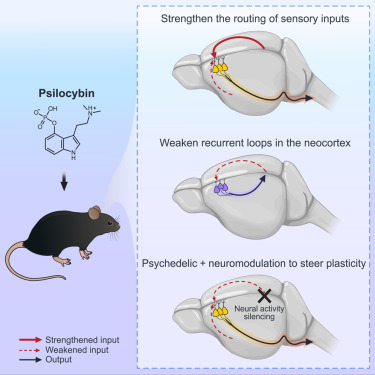
When psilocybin is ingested, it converts into psilocin, which crosses the blood-brain barrier and binds primarily to serotonin receptors — especially the 5-HT2A receptor in the prefrontal cortex.
The prefrontal cortex governs:
- Executive function
- Decision-making
- Impulse control
- Sustained attention
Key Neurological Effects
Microdosing may improve focus by:
- Activating 5-HT2A serotonin receptors
- Modulating glutamate activity
- Increasing Brain-Derived Neurotrophic Factor (BDNF)
- Enhancing neuroplasticity
- Reducing overactivity in the default mode network
Research groups at reputable institutions have explored how psychedelics may influence brain networks and connectivity. For authoritative background, see: Imperial College London’s Centre for Psychedelic Research and the Johns Hopkins Center for Psychedelic & Consciousness Research .
Unlike stimulant medications that increase dopamine sharply, psilocybin appears to work more through modulation and network recalibration. That distinction matters.
Related reading: microdosing for creativity • flow state & focus • neuroplasticity explained
Does Microdosing for Focus Actually Work?
Short answer: the evidence is promising but incomplete.
Self-report surveys commonly mention:
- Improved mood
- Increased motivation
- Greater task engagement
- Reduced rumination
Placebo-controlled work suggests expectation effects can contribute, which is one reason researchers recommend careful study design. If you like reading primary literature, use PubMed and search “psilocybin microdosing” or “self-blinding microdosing study.”
Here’s the nuance: even if expectancy contributes, behavior changes can still produce measurable cognitive improvements. Intention alters behavior. Behavior alters neural wiring.
The mechanism is plausible. The anecdotal evidence is substantial. The long-term clinical data is still developing. It sits in the gray zone between experimental optimization and established treatment.
What Is the Best Microdose for Focus?
Typical range: 50mg–200mg of dried psilocybin mushrooms.
Most beginners follow this approach:
- Start at 50mg
- Increase in 25mg increments every few cycles
- Stop when subtle cognitive enhancement appears
- Avoid perceptual effects
Signs You’ve Taken Too Much
- Mild anxiety
- Sweaty palms
- Visual brightness increase
- Distracted mental stimulation
If that happens, reduce the dose next cycle.
Body weight is not a reliable predictor. Receptor sensitivity varies significantly between individuals. This adjustment process is called titration, and skipping it is the most common beginner mistake.
Precision Dosing = Cleaner Results
The easiest way to dial in focus is consistency. Pre-measured capsules help you track outcomes and refine your protocol without “hot spot” surprises.
Best Microdosing Protocols for Focus
There are two widely recognized protocols.
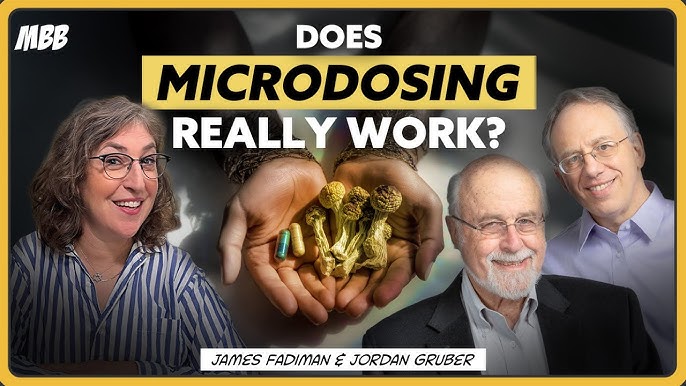
The Fadiman Protocol
Common schedule:
- Day 1: Dose
- Day 2: Rest
- Day 3: Rest
- Repeat
This helps prevent tolerance buildup and lets you observe “afterglow” effects on non-dose days. Many users report peak focus on the first rest day.
The Stamets Protocol
Common schedule:
- 4 days on
- 3 days off
- Often stacked with Lion’s Mane and niacin
The stack is theorized to support neuroplasticity pathways (including BDNF). Evidence is still emerging. For beginners, the Fadiman protocol is often the more conservative start.
Suggested internal links: microdosing protocols explained • Lion’s Mane benefits • microdosing safety guide
Want a Simple Starting Point?
If you’re building a focus routine, start with a repeatable dose and a consistent schedule—then track what changes.
When to Microdose for Focus (Timing, Food & Caffeine)
Morning Timing
Many users dose between 8:30 AM and 10:00 AM. Cortisol peaks early, and dosing into that peak may amplify anxiety. Waiting until cortisol drops slightly often produces calmer clarity.
Fasted vs Fed
- Fasted: faster onset, stronger effect
- Light breakfast: smoother onset
High-fat meals can slow absorption.
Caffeine Interaction
Caffeine plus psilocin can amplify jitters for some people. Consider reducing caffeine by ~50% on dose days.
Suggested internal link: how to avoid caffeine crashes
Microdosing vs Caffeine vs ADHD Medication
| Microdosing | Caffeine | ADHD Medication | |
|---|---|---|---|
| Crash | Rare | Common | Possible |
| Neuroplasticity | Potentially | No | No |
| Dependency Risk | Low | Moderate | Higher |
| Emotional Blunting | Rare | No | Possible |
| Anxiety Risk | Dose dependent | Moderate | Dose dependent |
This content is for educational purposes only and is not medical advice. Consult a qualified professional for personalized guidance.
Integration: Why Intention Determines Results
Microdosing can enhance focus — but it doesn’t choose the target. If you open social media, you may focus on it with surprising intensity.
Best practice:
- Write your top 3 priorities before dosing
- Use distraction blockers
- Journal observations afterward
Neuroplasticity windows amplify what you reinforce.
Whole Mushrooms vs Synthetic Psilocybin for Microdosing
Whole mushrooms contain additional compounds that may influence experience. Synthetic or standardized formats can offer more predictable dosing.
For professionals microdosing for focus at work, dosing consistency is critical. If you prefer pre-measured dosing, consider Theta Wave Microdosing Capsules .
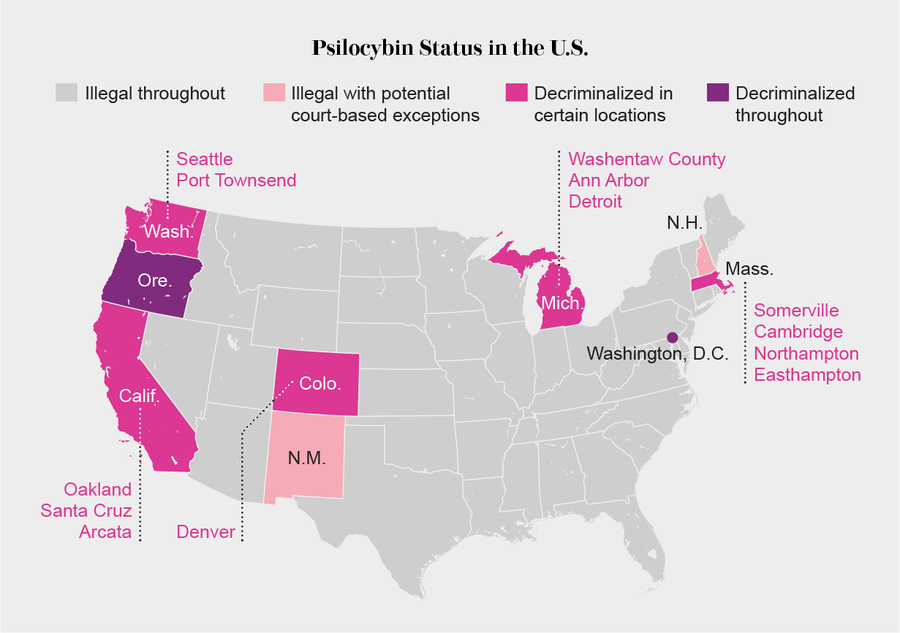
Is Microdosing Legal? Current U.S. Overview
Legal status varies significantly by location.
- Oregon operates a regulated therapeutic access model
- Colorado passed a natural medicine framework
- Some cities have decriminalized possession
Elsewhere, psilocybin remains federally illegal. Always verify local laws before making any decisions.
Is Microdosing Safe?
At true microdose levels, reported risks are relatively low, but this is still biologically active.
Avoid if you:
- Have a history of psychosis
- Have bipolar disorder
- Take SSRIs or MAOIs without medical supervision
- Are pregnant
Tolerance can build with consecutive daily dosing — which is why protocols include rest days.
Suggested internal link: microdosing safety guide
FAQ: Microdosing for Focus
Does microdosing psilocybin improve focus?
Early research and self-reports suggest microdosing may support sustained attention and cognitive flexibility, though placebo effects may contribute.
How much psilocybin should I take for focus?
Many people start at 50mg–100mg and titrate slowly until they find a subtle, functional dose without perceptual effects.
Is microdosing better than caffeine?
Some report calmer, longer-lasting focus without a crash, but response varies and caffeine can interact on dose days.
Can microdosing help ADHD?
Some individuals report benefits, but clinical evidence is not yet sufficient to recommend it as treatment.
How long does a microdose last?
Effects often begin within 30–60 minutes and may last 4–6 hours.
Can you build tolerance?
Yes. Consecutive dosing can reduce effects, which is why protocols include rest days.
Bottom Line: Is Microdosing for Focus Worth Exploring?
Microdosing for focus isn’t a miracle cure. It isn’t FDA-approved therapy. It also isn’t automatically pseudoscience.
The mechanism is plausible. The early data is promising. The anecdotal volume is significant. The best results typically come from structure:
- Start low
- Follow a protocol
- Reduce caffeine
- Set intentions
- Track outcomes
It’s a tool — not a shortcut.
Ready to Build Sustainable Focus?
If you want a consistent starting point for a structured focus routine, begin with precision dosing and simple tracking.